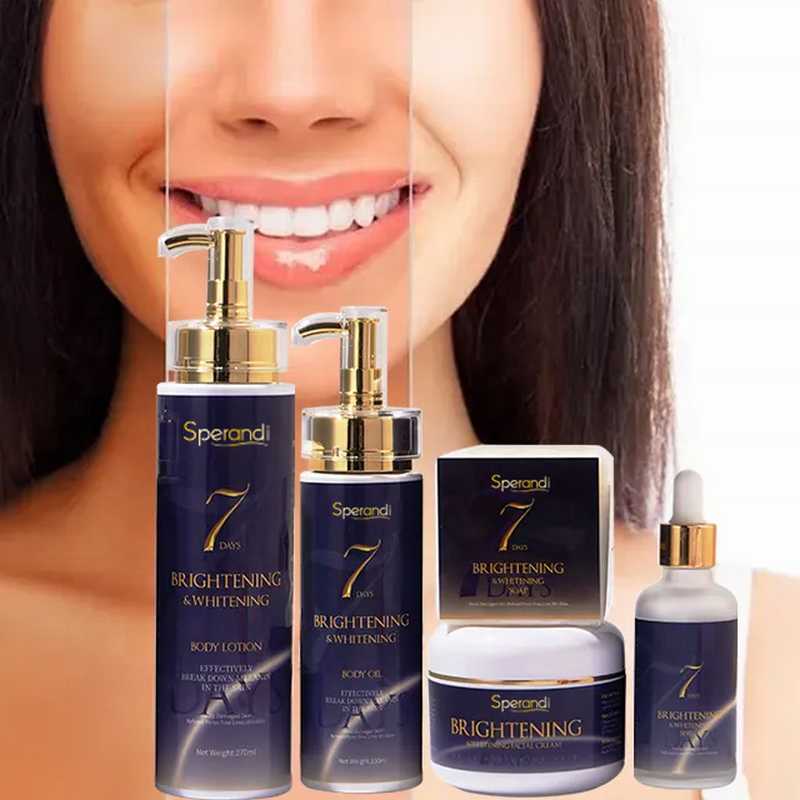
Choosing among private label vs white label vs OEM is an operating decision, not a branding exercise. Each model changes who controls the formula, how fast a product reaches market, how much capital sits in inventory, and how defensible the finished product is on shelf. For brand owners, retailers, and distributors, the right route depends on stage, margin structure, and the level of exclusivity the brand can support.
Private Label vs White Label vs OEM: Definitions That Drive Decisions
White label is the most standardized route. A manufacturer offers a pre-developed product, often a stock formula and stock packaging, and the buyer applies its own brand. The formula is usually available to other buyers, so speed is high but differentiation is limited.
Private label sits between stock and custom. A contract manufacturer produces goods under the buyer’s brand, and the buyer may select a formula, adjust fragrance, texture, skin feel, or packaging, and set its own positioning. The key is to confirm whether the formula will be exclusive or shared.
OEM generally means the brand defines the formula and specification, and the manufacturer produces to that brief. The brand carries more responsibility for formulation, testing, and claims, while the manufacturer brings production discipline, equipment, and quality systems. OEM offers strong formula control and differentiation, but usually requires more development time and a larger commitment.
ODM moves more development work to the manufacturer. The manufacturer develops formula platforms, textures, and product concepts; the brand selects and refines them. ODM can be faster than full OEM because the formula base already exists, while offering more room for exclusivity than a standard white label.
Comparison Table: Control, Speed, MOQ, Differentiation, Best-For
| Model | Control over formula | Speed | MOQ | Differentiation | Best for |
|---|---|---|---|---|---|
| White label | Low; stock formula | Fastest | Lower entry runs; confirm stock packaging | Low | First market tests and low-risk entry |
| Private label | Moderate; stock base with selected adjustments | Moderate | Industry-typical runs often around 500–1,000 units per SKU, confirmed after sampling | Medium | Retail shelves and distributor ranges |
| OEM | High; brand-led specification | Slowest | Varies; sampling and custom packaging can raise the initial commitment | High | Established brands and IP-led formulas |
| ODM | Medium-high; manufacturer platform adapted | Moderate to fast | Often lower than full OEM because a formula platform exists; confirm by project | Medium-high to high with exclusivity | Brands wanting a custom feel without full formula development |
Decision Framework by Brand Stage
Startup or first-time beauty brand. Cash and proof matter more than a proprietary formula. White label or a focused ODM project can validate demand with a controlled first run. Keep the range narrow, sample textures before committing, and ask whether the chosen formula is shared. Industry-typical private-label runs often start around 500–1,000 units per SKU, but actual MOQ depends on formula, packaging, and decoration; sampling always comes first.
Retailer or distributor. A retailer or distributor usually needs a coherent shelf story and reliable replenishment. Private label is often the practical fit: the buyer can select formulas, adjust fragrance or skin feel, and source packaging that supports the retail concept. If the range must stand apart from competing shelves, ODM with a fine-tuned formula is stronger than a standard stock product. Ask for documentation early—certificates available upon request—and confirm that the model supports the packaging format, fill size, and claims the channel requires.
Established brand. An established brand with a loyal base should protect differentiation. OEM or ODM with exclusivity is usually the better route when the formula is central to the brand promise. The brief can specify texture, efficacy direction, fragrance, skin feel, and packaging constraints; the manufacturer then develops or adapts a formula and produces at scale. This is where R&D depth and production control matter. Yunmei reports a 1,500 sqm R&D center and 35 production lines, supporting formula fine-tuning and commercial production across nine categories.
OEM/ODM Support Across Nine Beauty Categories
Guangzhou Yunmei Cosmetics Co., Ltd. is a cosmetic contract manufacturer based in Guangzhou, China, operating for nearly two decades. The company positions itself as a full-range custom manufacturer covering nine categories: Skin Care Set, Body Care, Eye Care, Face Care, Hair Care, Lip Care, Makeup, Men Care, and Baby Care. For brands comparing private label vs white label vs OEM, this breadth matters because one partner can support multiple SKUs without forcing every product into the same development model.
As reported by the company, Yunmei operates two manufacturing facilities totaling 30,000+ sqm, a 1,500 sqm R&D center, 35 production lines, and a Class 100,000 cleanroom. Company-stated daily capacities include 1 million sheet/eye masks; 260,000 units of creams, lotions, serums, and cleansers; 50,000 makeup units; and 260,000 bottled units. These figures are useful for planning, but they should be matched to each formula, packaging format, and decoration requirement.
The one-stop OEM/ODM service covers formula development and fine-tuning—fragrance, texture, skin feel, and efficacy direction—plus packaging sourcing, quality inspection, and logistics. Yunmei states that it holds US GMPC and EU ISO22716 certifications and was recognized as a Guangdong high-tech enterprise in 2021. Additional certificates are available upon request. It is also an 8-year Alibaba Gold Supplier (Custom Manufacturer).
For lip color programs, the company offers creamy, velvet, matte, and pearlescent textures, with variants that include liquid lipstick, solid matte, and matte stick. Brands can start from an existing formula and fine-tune fragrance, texture, skin feel and efficacy direction to suit their positioning. That flexibility suits brands that want the speed of an existing formula base with room for fine-tuning.
Common Pitfalls When Choosing a Production Model
- Treating private label and white label as synonyms. The commercial difference is exclusivity: a white-label formula is usually available to other buyers, while a private-label program may or may not include an exclusive formula. Confirm this in writing.
- Assuming a stock formula is exclusive. If exclusivity is essential, ask for a fine-tuned or custom formula and clarify ownership and restrictions.
- Skipping sampling. Texture, fragrance, skin feel, and packaging compatibility are difficult to judge from a spec sheet. Sampling should come before a production commitment.
- Underestimating packaging and MOQ. The formula may be ready, but the bottle, cap, pump, tube, or decoration can change the minimum order and timeline. Industry-typical MOQs are a starting point, not a quotation.
- Leaving documentation to the end. Buyers in Europe, America, and the Middle East may need different paperwork. Ask early for certificates available upon request and confirm what the target market requires.
FAQ
Is private label the same as white label? No. White label usually refers to a ready-made product available to multiple buyers under different brands. Private label is a broader term for goods made for a buyer’s brand; it can use a stock formula or include customization. The practical question is whether the formula and packaging are shared or exclusive.
Which model is fastest to launch? White label is generally fastest because the formula and often the packaging already exist. ODM can also move quickly when a suitable formula platform is available. Full OEM usually takes longer because the formula and specification are developed or confirmed first.
Can a stock formula be made exclusive? In many ODM programs, a formula can be fine-tuned and reserved for one client, subject to agreement. A standard white-label formula is normally not exclusive. Clarify exclusivity, territory, and duration before sampling.
What MOQ should a first run expect? MOQ depends on formula, packaging, decoration, and filling. For mainstream private-label runs, industry-typical starting points are often around 500–1,000 units per SKU, but this is not a universal quotation. Sampling always comes first, and the final MOQ should be confirmed for the specific project.
Talk to a Formulation Specialist
Bring your category, target texture, packaging direction, and launch window to the conversation. Send your brief to [email protected] or WhatsApp 13728287354; Vicky, Rebecca, Nicole, Betty, Julie, and Sindy can coordinate sampling and next steps. Talk to a Formulation Specialist before you lock a model, MOQ, or packaging format.